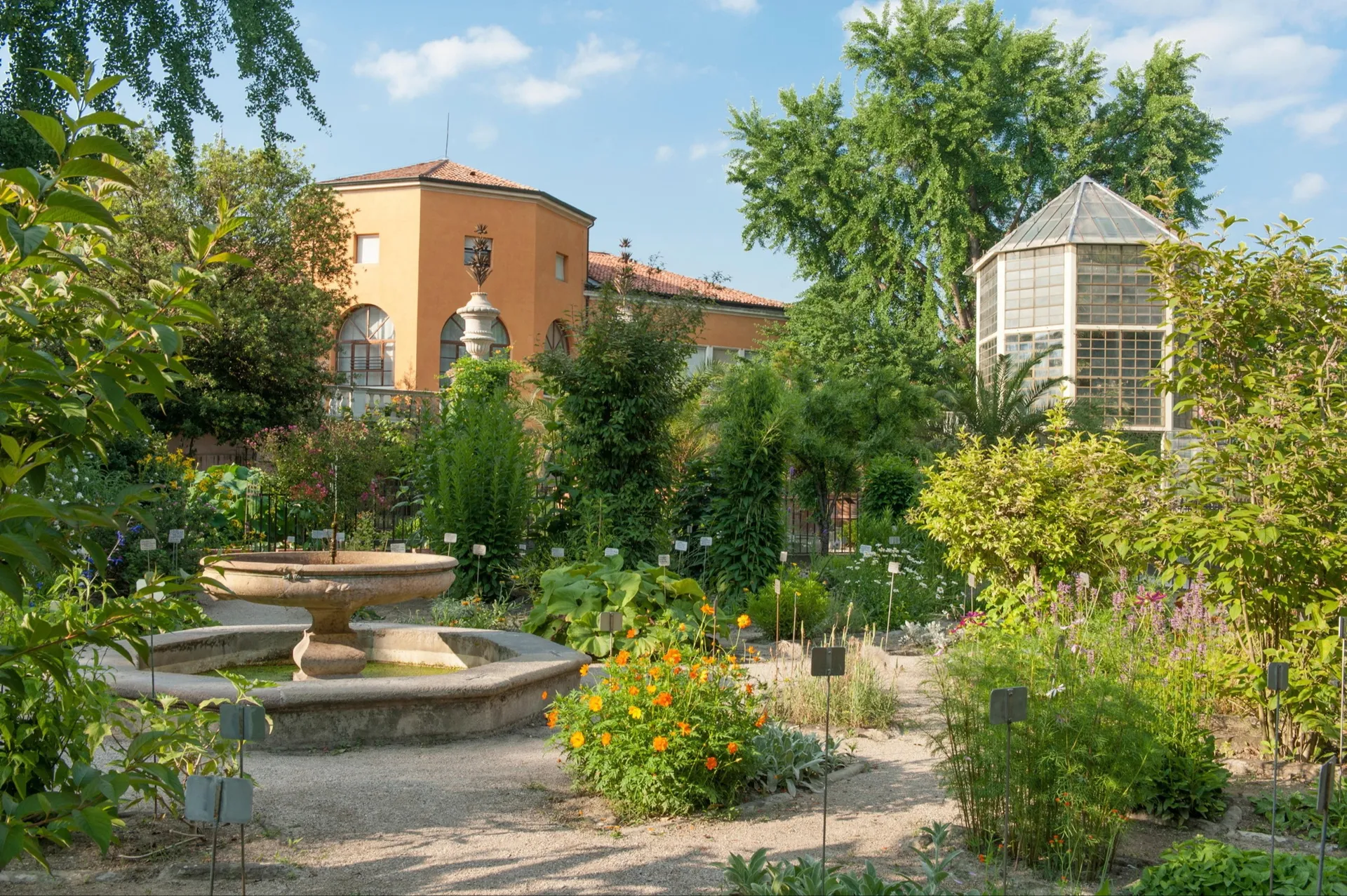
Here is one of my rules: when in a foreign city, check for a botanical garden. Rome’s is a disappointment and Berlin’s needs an upgrade, but the botanical gardens in New York, Edinburgh and Munich are unmissable. Even those that fall between these extremes keep green thoughts alive in a temporarily urbanised mind. One green thought leads to another, as I have just found in Italy.
Padua’s botanical garden in northern Italy traces its history back to 1545 and lays claim to be the oldest in existence. In Italy the 1540s were indeed a formative time for botanical gardens. Padua’s began with a vote by the Senate in Venice, Padua’s overlord, in May 1545. In December, Florence followed suit at the prompting of its grand duke Cosimo de Medici. While Pisa had a botanical garden before 1545, as a letter referring to it seems to prove, Padua’s claim to be the oldest rests on it being the botanical garden that has existed longest on the same site. Certainly, these Italian gardens are all older than any in England. The first English botanical garden is Oxford’s, founded in 1621 on the site of a medieval Jewish cemetery.
I first saw Padua’s garden in a hot August 35 years ago. It was interesting, but in need of attention. It has received it since 2000 and is now in much better form. It is not only because it has a new visitor centre, Biodiversity Garden and Botanical Museum. Padua’s glasshouses still have a good collection of carnivorous plants and specimens of the small variety of palm tree that fascinated Goethe on his visit in 1786. He studied it carefully and went on to write a book on the “metamorphosis” of plants, arguing for an original Ur-plant from which all others derive. He had no idea of evolution and Darwin’s theories make his a curiosity.
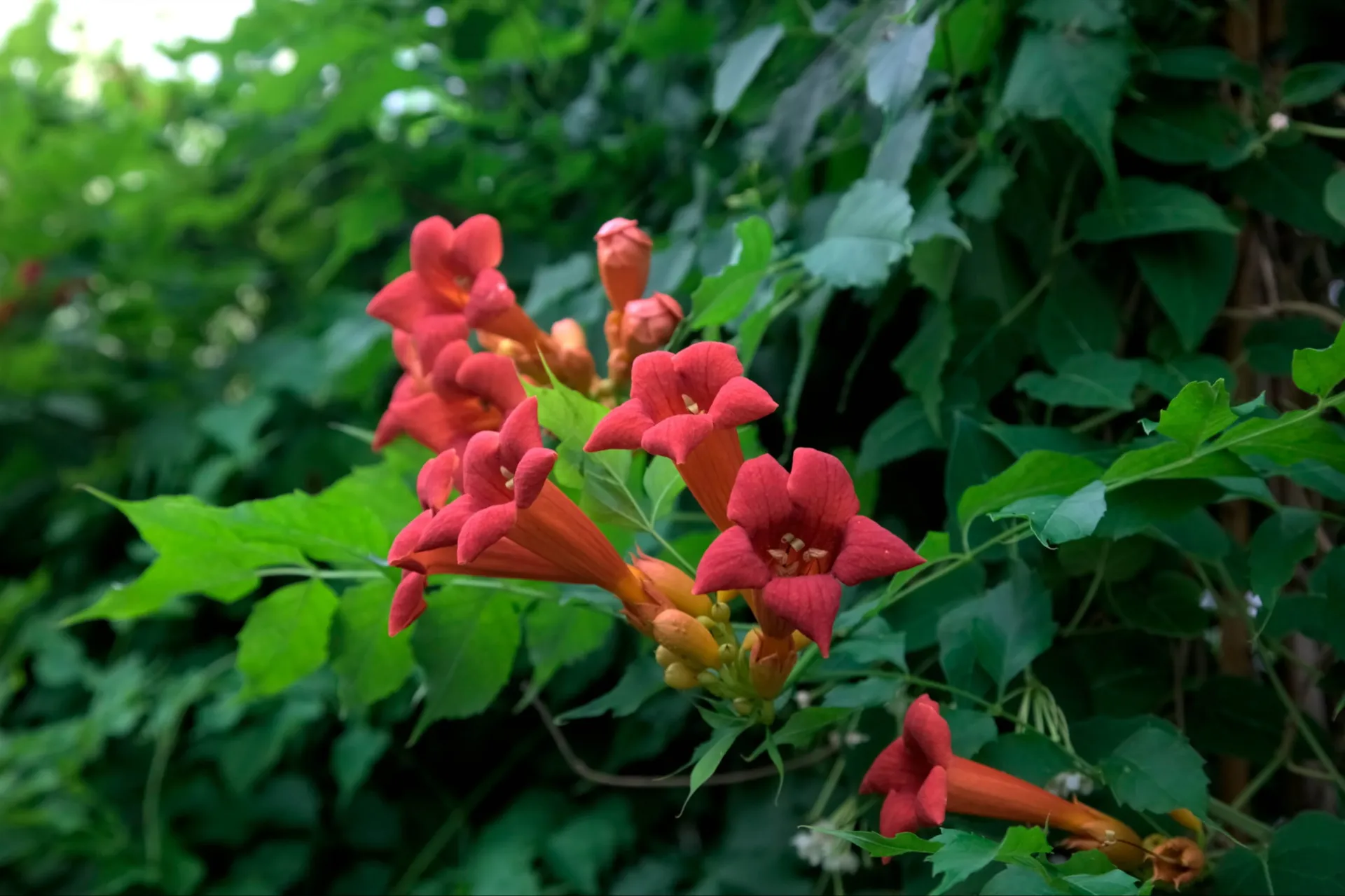
Padua’s garden was not just a site for his misunderstanding. He appreciated other plants, especially a scarlet-flowered outdoor climber that is still a mainstay of gardens in London and warm climates. Campsis radicans is extremely vigorous and willing to flower even in warm Britain, bearing those red-orange trumpet-shaped flowers that give it the popular name of Trumpet Vine. Its native home is the east coast of the US and southern Ontario.
English settlers in Virginia were quick to send plants back home, though it was an invasive climber in the wild. By 1790, it was well established on Padua’s wall, where Goethe admired its magical effect like a tapestry, covering the wall with scarlet bells. The better form now is Madame Galen, one with bigger and better trumpets, which originated in Italy and was put on the market in the 1880s. I can never decide if in ordinary gardens its vivid flowers are worth all the space its vigorous stems occupy. It has no scent.
Goethe knew our campsis as Bignonia, for many years its name in gardens. Padua’s garden was not founded for botany as we now understand it. In 1533 the city’s university had a professor for the “reading of Simples”: plants with therapeutic properties. The Padua garden was to be a garden of medicinal plants, linking up with this teaching. Its naming and taxonomy were not ours, but it had a superbly designed plan.
After his visit, Goethe wrote a book arguing for an original Ur-plant from which all others derive. He had no idea of evolution
The architect Andrea Moroni drew it at the very beginning. He was already working for the monastery that ceded the ground for the new garden: he devised a perfect circle in which individual flower beds would lie. The circle was defined by a perimeter of high walls against which there were 16 segmented beds. Further inside there was a second circle dominated by four rectangular subdivisions, each with a further pattern of flower beds.
The outer circle of walls has been replaced by a rectangular one, but the curving segments are still visible and are mostly planted with fine trees. Further inside, the circle of the plan is still visible, as are the inner subdivisions and little flower beds. They are a testimony to meticulous and rational geometric planning. Botanical gardens should be based on an underlying notion of order, imposed by man on nature. Padua’s still is.
The main inner subdivisions are defined by smart railings, also a later introduction, but the beds have a style that would be transferable to English gardens too. They are edged and divided by stone blocks laid vertically with one thin curved edge protruding just above ground level. Modern designers sometimes set brick on edge for a similar effect, but Padua’s stone blocks are more stylish.
I measured the spacing to help you copy it. Most of the little beds are about 3ft wide and long. Some of them taper to a point and make a narrowing triangle, but others are a grid of squares. The paths between them are 4ft wide and surfaced with smart grey-yellow grit. No weeds poke through.
Mild, sunny October is not hot August, but I found the outdoor plantings and the hundreds of pots more cheerful than on my former visit. Stone-edged beds of purple autumn crocuses and colchicums are rather smart, as are beds with red, not pink, amaryllis and even a grass with fluffy purple heads, Muehlenbergia capillaris, which is widely on sale in Britain. The stone edges prevent this muhly grass from becoming invasive.
What most impressed me was the resistance of two particular plants to a Paduan dry summer, though books often say they need a damp soil. Plainly they do not. One is a tree and the other is a good herbaceous plant, flowering now.
Old tall trees are a distinction of the botanical garden, as in Florence and Pisa. A ginkgo tree goes back to 1750, before Goethe’s visit, and is a true hermaphrodite, as its male trunk has been grafted with a female branch. A superb Magnolia grandiflora was planted in 1786 and is even bigger than a fine one in the cloisters of Padua’s famous cathedral. A tulip tree towers to the sky, but what impresses me is a big Swamp cypress, which is doing likewise.
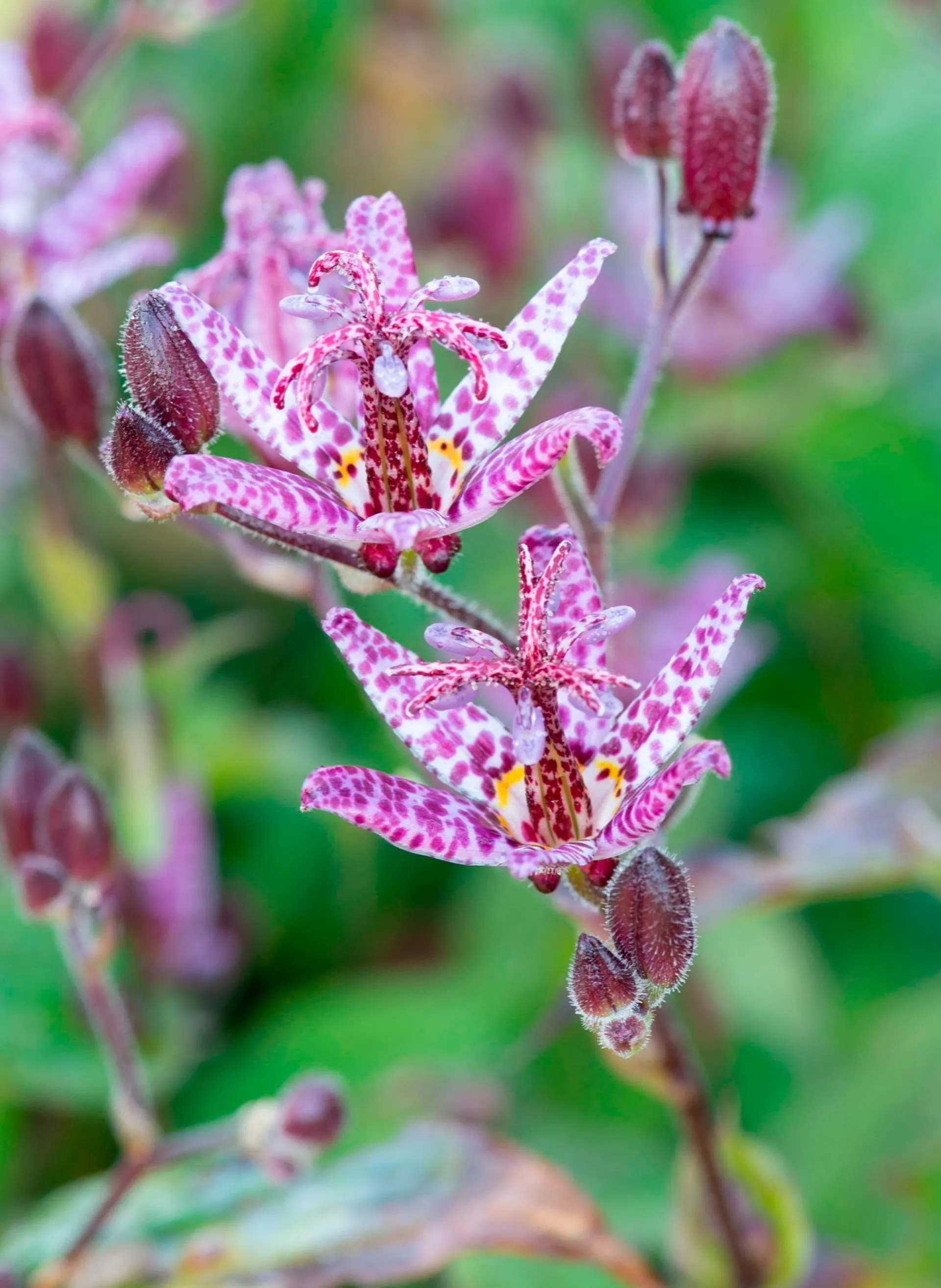
Swamp cypress, or taxodium, is often found in wet ground, but it does not insist on it. Botanical gardens have big specimens in dry places and hot climates, from New York to Padua. In gardens and fields we should be more bold and use it away from water. We should also be bolder about the spotted little toad lily or tricyrtis. The official advice is always to plant this October-flowering plant in shade in damp soil. Why though is Tricyrtis formosana flowering freely in Padua, 2ft high and happy in a hot summer without irrigation? Here too I think we have been inflexible. Slugs, not sun, are what kills this excellent plant in Britain.
Padua’s botanical garden is good to visit, but the overriding reason for visiting the city as a tourist is its Arena chapel, frescoed by Giotto, the maestro, from 1303-1305. With green thoughts in mind I visited it too and became aware of details I had never expected. Art and flowers have featured in this column all year, but I will save Giotto’s surprises for that appropriate season whose founding event he also painted, Christmas.
Find out about our latest stories first — follow @ft_houseandhome on Instagram