Across a long lifetime and productive until the end, David Hockney, who has died aged 88, was Britain’s most popular artist, and one of very few painters anywhere to be a household name. Already heralded a draughtsman of genius at the Royal College of Art in 1959, over seven decades he created paintings of places and people which are both instantly alluring in their crystalline, stylised yet lucidly observed realism, and highly sophisticated pictorial constructions. “I think the world is beautiful and exciting and mysterious,” he said; his paintings communicate that pleasure.
Hockney made his name with hedonistic Los Angeles pictures including “Peter Getting out of Nick’s Pool” and “A Bigger Splash”, on which he worked for days to depict a momentary cascade of water, and original double portraits in meticulously rendered, glamorous domestic settings: “Christopher Isherwood and Don Bachardy”, one of Hollywood’s first openly gay couples; “Mr and Mrs Clark and Percy”, Hockney’s fashion designer friends Celia Birtwell — his muse into old age — and Ossie Clark in their Notting Hill Gate apartment during their troubled marriage. Defining images of postwar revolutions in sex and class, taste and money, these are icons of the 1960s-70s: upbeat, elated in their sense of freedom and fresh possibilities.
During the half century since, as contemporary art became increasingly conceptual and hermetic, Hockney the virtuoso figurative painter stood out for his democratic appeal and accessibility. “Unfortunately there is within modern art a contempt for people”, he said in 1977. “I do want to make a picture that has meaning for a lot of people. I think the idea of making pictures for 25 people in the art world is crazy and ridiculous.” Instead, he attracted millions: his iPad drawing of a daffodil in his Normandy garden, posted on Instagram with the message “do remember they can’t cancel spring”, was world news during the pandemic in March 2020.
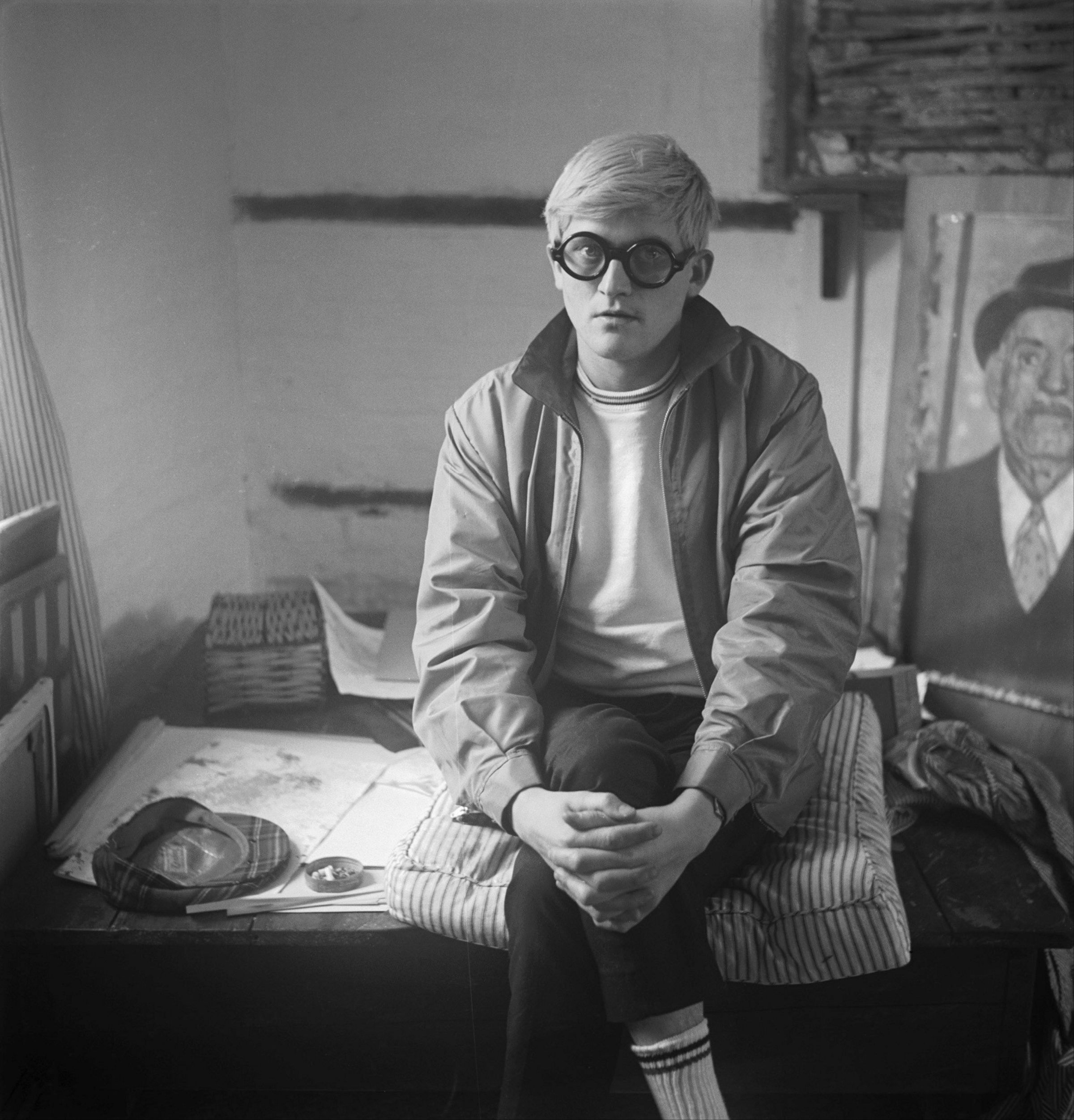
As compelling as his paintings was his outspoken, droll, chain-smoking public persona, never quite losing a rebellious air. In Swinging Sixties London he was the happily gay blond bombshell with owlish glasses, astonishing the Royal College with spare, witty articulations of the male form such as “We Two Boys Forever Clinging” (1961) — homosexuality was still illegal in Britain, and “well, I hope they don’t get any closer than that” was his tutor Roger de Grey’s response.
At 87 Hockney painted a flamboyant tweed-suited self-portrait, cigarette in one hand, crayon in the other: a picture, advertising his 2025 Fondation Vuitton exhibition, banned from the Paris Metro because it referenced nicotine. No matter: 900,000 visitors flocked to his Vuitton show, and Hockney (“I smoke for my mental health”) kept to his Davidoff Magnums.


The fourth of five children in a close family, David Hockney was born in 1937 in Bradford to Kenneth, an accountant’s clerk, conscientious objector and fierce anti-smoking campaigner, and Laura, a Methodist and vegetarian. He threw off his parents’ beliefs, but kept their intensity of conviction; he stubbornly and successfully went his own way from the moment he refused to write the essay required for his final Royal College exam; the College changed the rules to allow him to graduate.
Before he left, he was signed by dealer John Kasmin, and in 1963 his first solo show, Pictures with People In, was a sellout. “I knew I had a star on my hands straightaway,” Kasmin recalled, “though David did not have a big head. He took it all with great ease and grace.”
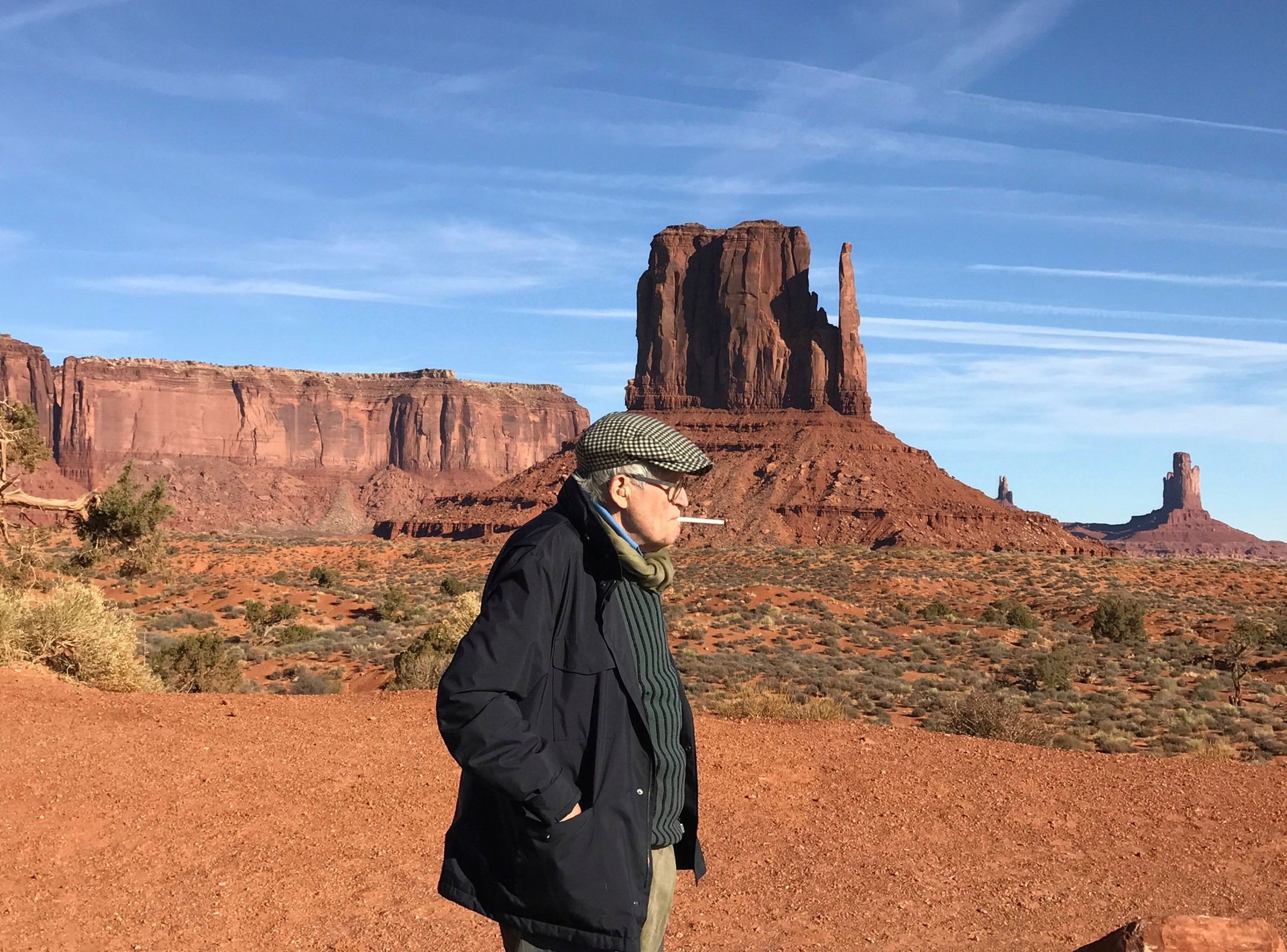
In 1964 Hockney moved to Los Angeles: “as I flew over San Bernardino and saw the swimming pools and the houses . . . I was more thrilled than I have ever been in arriving in any city.” California offered space, sun and sex — a bohemian gay culture — and an unpainted topography. “I suddenly thought: ‘My God, this place needs its Piranesi . . . so here I am’”. Painting sun-drenched pools, palm-fringed modernist buildings and highways stretching to infinity, Hockney developed a pictorial language whose bright, clean lines, voluptuous colour and geometry determined the rest of his career.
So did an autobiographical approach, depicting a circle of family, friends, lovers. Paintings recount his 1960s relationship with his boyfriend Peter Schlesinger, from the ecstatic, light-suffused semi-nude in bed, “The Room, Tarzana” (1967), to their break-up, “Portrait of an Artist (Pool with Two Figures)” (1972), which sold for $90.3mn in 2018, a record for a living artist. Hockney’s partner during the 1970s, Gregory Evans, who continued as his studio manager after their romantic relationship ended, was the subject of some 40 portraits over as many years. Straightforward portraiture, most brilliant in dashing, affectionate, fluent drawings, was a life-long pleasure.
Living between Los Angeles, where he bought a home in the Hollywood Hills in 1979, London and Paris through the 1970s-90s, Hockney experimented restlessly across media: diverse prints, cubist photomontages, dazzling set designs beginning with Glyndebourne’s 1975 cross-hatched The Rake’s Progress. Each medium fuelled another. Theatre, highlighting illusion and artifice, opened up a new sense of flattened space in his vertiginous Californian landscapes: “Nichols Canyon” (1980), “Pacific Coast Highway and Santa Monica” (1990).
Hockney brought American scope and scale to England when he returned to depict the pastoral Yorkshire of his boyhood en plein air, in oil, watercolour, charcoal, and video, occupying him for over a decade and culminating in the Royal Academy’s 2012 blockbuster A Bigger Picture.
In 2019 he relocated to Normandy, partly in homage to Monet, to make a comparably monumental series documenting the seasons, much of it drawn in colour on an iPad, then produced as large format ink-jet prints. His current exhibition at the Serpentine gallery, A Year in Normandie, was hailed as the most persuasive and moving of his iPad pictures, a contemporary reworking of the pastoral tradition.

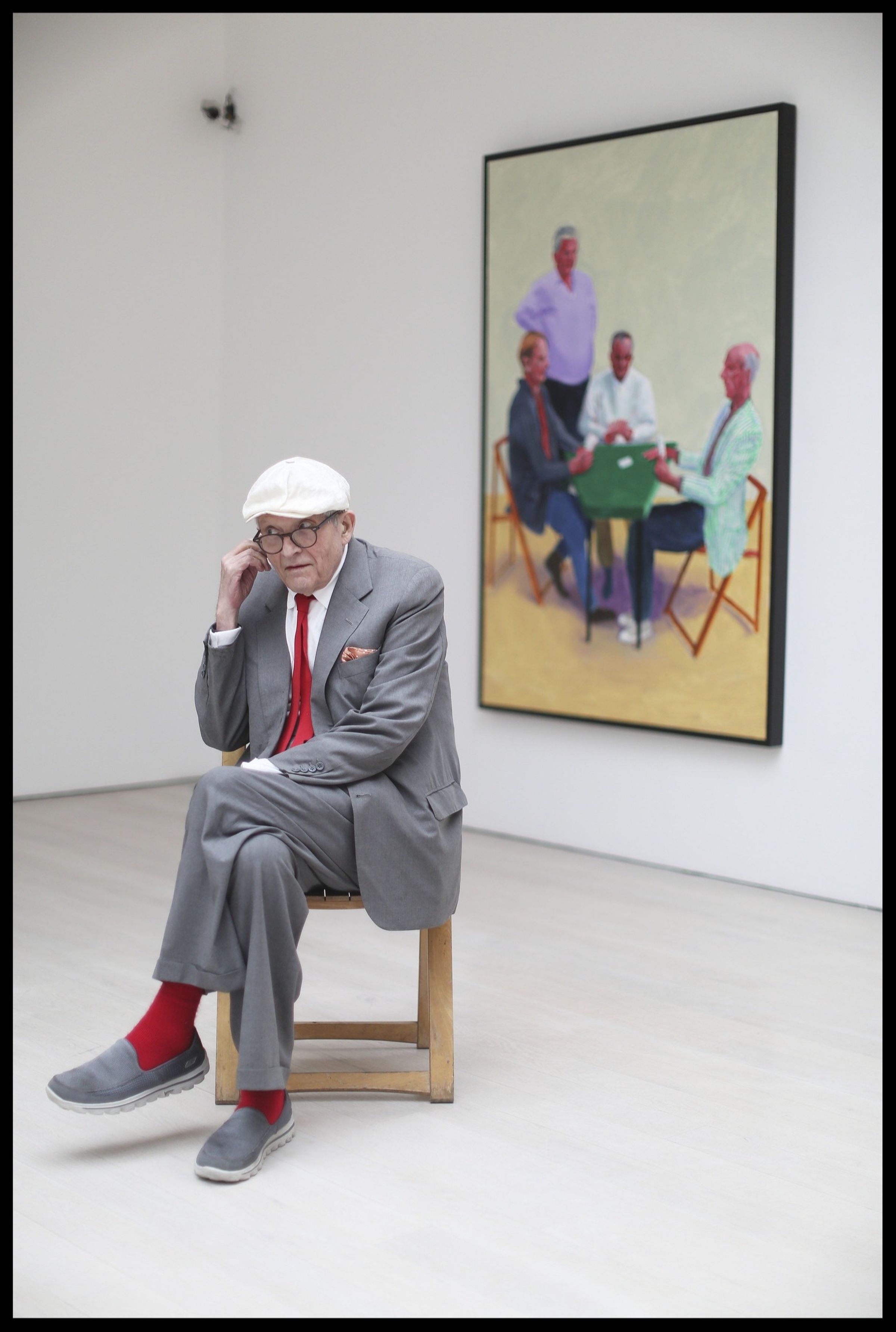
As his paintings suggest, Hockney the man was charismatic, generous, warm, loyal and down to earth. Stoic against deafness and infirmity, an energetic presence choreographing exhibitions from his wheelchair, and wonderfully cared for by his final partner Jean-Pierre Gonçalves de Lima, in old age he would sign off messages “Love Life”, which he did to the full. “I have the good fortune that it can make me happy to watch raindrops running down a windowpane,” he said. “The sense and purpose of my paintings are pleasure and joy.”